Friday, December 09, 2005

McCartney's Chaos and Creation Nominated for Four Grammy Awards


As you probably have guessed from reading my blog, I am a big fan of the music of Paul McCartney, John Lennon and The Beatles. Some might ask, as an evangelical Christian, how can you be a fan of their music? My quick response is that I recognize their musical gift as something tremendous and God-given, and so I can appreciate the beauty and the craft of their songwriting, without necessarily endorsing the philosophical or other beliefs of their songs.

In any case, I am very pleased to hear that McCartney's latest album, Chaos and Creation in the Backyard, has earned Paul three Grammy nominations: Album of the Year, Best Male Pop Vocal Performance for the album's first single, "Fine Line", and Best Pop Vocal album; in addition, Nigel Godrich is nominated as Producer of the Year for his work on the album.

Why am I pleased? Well for one thing, I think the album is very deserving (see my review). It is also gratifying that something that I really like personally and appreciate musically is being recognized by these well-known awards, that represent, at least by the standards of the present music industry, the best work in the field. In recent years, I have found myself at odds with a lot of popular and critical taste in music, feeling that there has been a degeneration in the recognition of what constitutes excellence in music, and a corresponding overall decline in the quality of popular music.

I'm quite certain however, that I'm not alone in this feeling. Music lovers perhaps have an instinctive understanding that there is such a thing as quality in music, and that although tastes in music will always be marked by subjectivity, nevertheless, true excellence can be recognized (or else why have awards?), sometimes intuitively, sometimes through training. Whenever music that is truly deserving because of its excellent quality is recognized and lauded, I think a step forward is made toward the restoration of true beauty and artistry back to popular music.

Congratulations, Paul! I hope you win!!

The 48th Annual GRAMMY Awards will be held on Wednesday, Feb. 8, at Staples Center in Los Angeles and once again will be broadcast live in high-definition TV and 5.1 surround sound on CBS from 8 – 11:30 p.m. (ET/PT).

Thursday, December 08, 2005

Remembering John, Embracing a New Dream


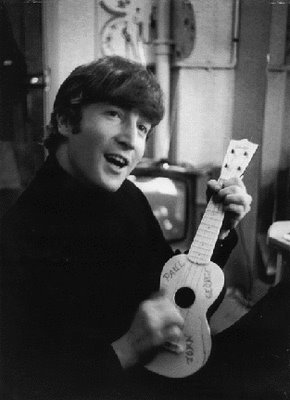
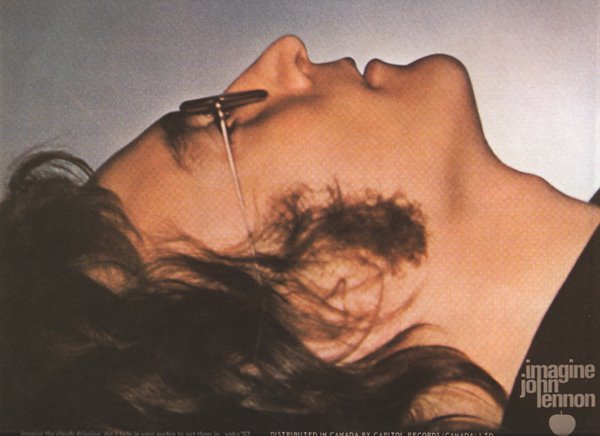
Today is the 25th anniversary of that fateful day --December 7, 1980-- when John Lennon was murdered by gunshots just outside of his home at the Dakota in NYC, his stunned wife Yoko only a few feet away. I remember that at the time, I had become a recent fan of John Lennon's solo work, and as a songwriter was inspired by Lennon's unique voice-- his combination of pithy, in-your-face lyrics and sensitive vulnerabilty. On one song, Lennon would rock with a jaded, satiric bite, and in the next, he was tender and gentle, singing paeans to love and Yoko.

In some ways, Lennon was an iconoclast, yet he was deep enough to know that "rock and roll" rebellion, for its own sake, was meaningless. In one of many acts of controversy (which he seemed to court), John and Yoko appeared totally nude on one of their album covers, as if to say, this is me, this is who I really am, I'm not this mythical Beatle icon you've constructed, I'm just a man, standing here with the woman I love. So also in his music, John got "naked" at times; it seems he sought to strip away his youthful illusions, to reject the false messages of society, that he might find and embrace his primal, essential, true self.

Listening to his music, reading and watching him in interviews, I felt kind of like I knew John. I considered him a friend. Despite his seriousness about things like peace in the world, John also seemed like he'd be fun to hang around with-- he had a playfulness which was child-like, even goofy at times; he seemed interested in many things; he was articulate and never boring. So when John was shot, I felt as if someone I knew had died and I was very sad. John had sung, about the Beatles and his past, "the dream is over", and now, with John dead, it seemed it really was.

I was young and dreaming ahead of my future, seeking to understand the meaning of it all, and John's quest for peace, his music and his relationship with Yoko had all seemed very romantic and inspiring. Maybe I too could be an artist, and make my impact on the world through my songs and vision. It would be a few more years before I would come to embrace a different vision, one with similarly high ideals of the potential for love and goodness to prevail over evil and ugliness, but also one that had to be embraced by a faith that saw that God is real, and that I needed Him.

Still today I remember John Lennon, the man and his music, and I'm thankful for the inspiration he gave me to make music and in making music, to try to say something that matters. Yoko, Sean and Julian, I pray you may find the Truth that I have come to know in the person of Jesus Christ. And in honor of John's passing, I am re-posting today an old article- Imagine: A New Heaven And a New Earth. To listen to John and the Beatles music, go to Q104.3's special tribute in honor of John here.

P.S. Another of my old posts, Gimme Some Truth, was inspired by Lennon's song of the same name, and may also be of interest.

P.S.S. My friend Mark Daniels at Better Living also has posted his own memories and thoughts on this anniversary of John's passing. Very well-written!

Lennon at the Bed-In

Imagine- A New Heaven And a New Earth


It is hard to believe that 30 years have already passed since the Beatles disbanded and went their separate ways, and John Lennon and his wife Yoko went off and staged their famous "Bed-In" for peace. I was only a young child in the decade of the 60's, but the social landscape today seems so far removed from that era's idealism. The 1960's had been a time of great unrest and turmoil-- the civil rights movement, Martin Luther King, Jr., Bob Dylan, The Beatles, hippies, drugs, "free love", and the Vietnam War were just a few of the personalities and phenomena making up the volatile social scene. But with all the unrest and violence that existed, there was yet a feeling, reflected in the arts and especially the music of the time, and perhaps bolstered by the elections of youthful and different kinds of leaders, like President John F. Kennedy and Prime Minister Pierre Trudeau, that the love and peace movement would somehow triumph over the evils of the "establishment". If people could somehow find the love and peace existing within themselves, and want them badly enough, they could foment a social revolution that would stop the evils promulgated by the "establishment"--the wars manufactured out of greed, the repressiveness of traditional societal roles, racism towards the Negro, intolerance of alternate sexual expression, and conformity to the status quo. The ideal of seeking harmony through "free love"-- the "Make Love, Not War" attitude--appealed to a young generation that, behind the facade of happiness of the previous generation, saw what it thought was hypocrisy, prejudice, hate and materialism.

I recently watched a documentary entitled "John & Yoko's Year of Peace" (2000), which follows John and Yoko's activities in the year 1969. The Beatles were soon to break up when John Lennon met Yoko Ono, an avant-garde Japanese artist, at one of her exhibitions, fell in love and married her. Like star couples of today, John and Yoko were major celebrities whose every move was being reported by the media. So Lennon and his new wife, spurred on by the thrill of honeymoon love and by their idealism, ingeniously decided to turn the media circus to their advantage and promote the cause of peace.

Watching footage of the Lennons in various interviews, including the famous "Bed-In" (the honeymoon rendezvous in which John and Yoko invited reporters to interview them while in bed to talk about peace), I was struck by the seriousness of their demeanor, yet also their light-heartedness and humor. Lennon is articulate and intelligent, gentle but also forthright when expressing his views. Yoko is serene and less vocal, but also shares her views with dignity and conviction. They talk about the cause of peace in the world with the optimism and sincerity of true believers. They seem convinced that their voice, being just one of many, will help spur on many like-minded people to speak out for peace, to become an effective worldwide movement. As their famous slogan plastered all over the world at the time declared: "War is over, if you want it".

Alas, we know today that Lennon's peace crusade, admired by some and vilified by others, did not mushroom into the powerful force for peace that they had hoped for. Conservatives shunned them, viewing the Lennons as foolish and naive at best, arrogant and dangerous at worst. Liberals sympathetic to their cause may have been too busy pursuing other agendas to join in mass, although the documentary shows that the Lennon's campaign did generate a certain momentum, which included a concert. Like Woodstock, the Lennon's year of peace seemed to be of the moment, generating a buzz that dissipated quickly. Yet the social and sexual revolution of the 60's did result in a certain measure of envisioned changes, including improved treatment of black people in America, better opportunities for women in the marketplace and new trends in politics, media and the arts that began then and continue to unfold today. Depending on your worldview, these changes have been either good or bad (or somewhere in-between) for America.

As a person of artistic temperament and an admirer of the songwriting genius of Lennon, I was, in my pre-Christian days, quite drawn to his message of love and peace. I would say that I'm still of course, sympathetic to his dream of a world where love and peace triumph over hate and war. Yet I also believe that Lennon was short-sighted in that, rejecting the Christian explanation of reality, he necessarily moved into a position that required him to believe that the innate "goodness" of humanity was a real thing, and if tapped into would become a potent force for radical change. In his song Imagine, Lennon dreamed a utopian world where, through the power of vision, humanity would reject all the illusions that separate us from one another-- "Imagine there's no... "Heaven", "hell", "religion", "countries", "possessions". Detached from all these divisive influences, these constructs of man, mankind's beauty would shine forth, enabling people to live "life in peace" and "be as one".

But world events since 1969 reveal, just as the world events did before 1969, that mankind is plagued by evils that have been part of human interaction since the dawn of history. The idea that simply getting enough people to wish for (or strongly desire) a world full of peace will bring it into reality has a certain easy charm. But can we continue to stare into the face of evil that we see all around us worldwide--the genocide, the rape, the murder, the starvation, the injustice-- all resulting from our inhumane treatment of one another--and believe that innate goodness will win the day?

Or is the answer to be found in rational thinking and education? If we train our children to be "tolerant", to view history according to our conceptions, and to think properly, will it prevent them from becoming criminals, of either the blue or white-collar variety, and instead becoming great and caring citizens?

Today across America we find among our young people rampant cheating, kids that start experimenting with sex at ever earlier ages, even kids killing other kids at school, sometimes for their iPods or sometimes just because a kid snaps and goes on a killing spree. We have heard of very young children beating each other brutally. Of course, there are many wonderful children in this country who don't steal, don't cheat and do become productive members of society. Yet it seems the negative patterns we see here in America are also present in Europe and in other "developed" nations.

The evils perpetrated by the adult world is their model. And this is not even taking into account all the horrific crimes perpetuated globally by terrorists, suicide bombers, and regimes that can only be properly described as evil in how they treat their people. With all of this wickedness surrounding us, are we naive enough to think that simply wishing for peace will make it come?

I applaud the fact John Lennon used his celebrity to advance a worthy cause (when he could just have easily, with his wealth, avoided controversy), and the fact that he was willing to confront hypocrisy and evil even as he sought to be a peacemaker; nevertheless it can be seen that his dream of peace was ultimately ineffective, because it did not properly diagnose the problem: the evil at the heart of mankind.

This is not a pleasant or politically correct message, though it is an accurate one. The Bible says in Jeremiah 17:9, "The heart is deceitful above all things and beyond cure. Who can understand it?" There is no time to be politically correct. Jesus may come back at any moment. The message of Jesus Christ is that we are in desperate need, and if we recognize our need, Jesus will fill it. What is our need? Our need is to know Jesus in order to be saved from our sins, which otherwise will destroy us forever.

Jesus spoke often of the reality of His kingdom and of the beautiful nature of it. It is a spiritual kingdom, one that is not of this present world, yet one that will someday physically reign over a new Heaven and a new Earth. All who are part of it will also be new people, with hearts (our spiritual center) and bodies completely made whole. And yes, peace will reign there. Yet His message to all who seek to enter this kingdom is "Repent, for the kingdom of God is at hand."

More Lennon-related posts: Gimme Some Truth and Remembering John, Embracing a New Dream.

Wednesday, December 07, 2005

Christian Carnival XCIX (99)

Christian Carnival 99 is up today at Attention Span, and Rev-Ed has come up with an ingenious theme- Famous 99's in History.

I was fortunate to get into the Carnival with my recent post, Another Way of Excellence, (a bit past the deadline, but Rev-Ed kindly took it anyway).

I encourage you to visit the Carnival, which, as usual, highlights some excellent and very fresh material from the Christian blogosphere. It's also a great way to discover new bloggers.

For instructions on how to contribute a post to the Carnival, go here. I can attest that hosting the Carnival is a lot of work but a worthwhile experience, having recently hosted the 96th Edition of the Carnival. The link above also provides instructions on how to apply to be a host, which besides being a good service to the blogging community, brings benefits to the host, in the form of traffic and links. So what are you waiting for?

BLIPS ON THE BLOGOSPHERE 1

This will be a recurring section in which I highlight various recent posts of interest around the blogosphere.

With God, Nothing is Impossible-- thats goes for both Introverts and Extroverts!

This week, Dan Edelen continues his excellent series of posts on hidden messages in the American Christianity with a post titled: Pastor O'Gill and the Little People. In the post, Dan, who describes himself as a "raging extrovert", makes the argument that introverts are too often left out of the leadership and activities of the American church, since the church is mostly overrun with extroverts.

I offer the following observation-- one I think Dan would agree with. While it is true that God has endowed each of us with a unique personality-- we need not be limited to whatever our so-called personality "type" is. Sometimes life calls upon extroverts to act in introverted ways, and sometimes introverts are challenged to become like extroverts. If each of us is relying on the empowering of the Spirit as we pursue obedience to God's mission for us, we may be expected to get out of our comfort zones.

The example of Moses
Moses, for example, didn't seem to view himself an "extrovert". When God called upon him to lead the people of Israel out of their slavery in Egypt, he complained to God that he wasn't very good at public speaking (Exodus 4: 10). Nevertheless, God expected that Moses would have no problem fulfilling the call God was giving him, saying to Moses, "Who has made man's mouth? Who makes him mute, or deaf, or seeing, or blind? Is it not I, the LORD? Now therefore go, and I will be with your mouth and teach you what you shall speak (Exodus 4: 11-12)." When Moses still hesitated, the Lord became angry, but in seeming concession to Moses' lack of confidence, he appointed Moses' brother Aaron, a more natural speaker, to become the mouthpiece of Moses, as it were. Yet we see from God's anger towards Moses that God would have been more pleased if Moses had relied upon Him to provide the necessary enpowering to speak the right words in his appointed ministry.

Purpose-Driven or Spirit-led?

Over at Windows to My Soul, Victoria Gaines has an interesting post titled Be Led, Not Driven. I think her post is a good warning to heed in regard to much teaching Christian teaching today regarding pursuing your purpose. "There is no purpose or destiny outside the life of Jesus Christ. We can't have life unless we have HIM," Gaines says. She continues:

... I'd rather cling to Jesus than all the motivational quotes in the world. I'm starting to see how power and enablement come, not through grand human effort, but by His Spirit. I want to work in tandem with His purposes, fueled by His Holy Spirit, but I need to be willing to pull away when all the world beckons. It also means giving up my dreams, my goals, my ambitions. It's a paradox. And it's a hard word: surrender. But in surrendering my agenda, I find His.

When life gets riddled with dream-speak and purpose-driven agendas, hey--just give me Jesus. Not programs, growth methods, or man's plans. Just Jesus.

His purpose for me is to know Him...


I agree with her main point, yet I do believe that God may inspire us through dreams, visions or just via the motivatios and giftings He has given us. I think that natural gifts and motivations, just like the spiritual gifts God equips us with, are not accidental, but given to point each of us in a direction that coincides with God's specific calling. Nevertheless, the important thing is not to hold tightly to such things, but to be willing, as Gaines says, to surrender all to the Lord, in order to discover His agenda.

Hat tip to Milton Stanley at Transforming Sermons.

Reformed Charismatic Debates with Cessationsists

Regarding the ongoing blogosphere discussion about spiritual gifts, continuationism vs. non-continuationism, etc., Adrian Warnock recommends two pastor bloggers who are reformed charismatics and notes that the debate has seemed one-sided so far, with Reformed Charismatics mostly offering their side. Diane over at Crossroads accepted the debate challenge with several posts, such as this one on healing, which I am only now discovering and catching up with. And Rob Wilkerson has again updated his massive and well-researched overview of the larger blogosphere discussion on this topic, in his post A Theological Pillow Fight Refereeing the Debate Between Cessationists and Charismatics. Thanks Rob!

Tuesday, December 06, 2005

Seven Questions, Seven Answers


Charlie Lehardy, over at AnotherThink (he's my good friend that I met at GodBlogCon'05, and now, a finalist for "Best Religious Blog" in the 2005 Weblog Awards!), was recently tagged to participate in a new "meme". As he described it on his own meme post, "a meme is something like a chain letter that spreads from blogger to blogger until someone starts a new one. Most memes seem to involve lists. This one requires seven answers to seven questions:

1. Seven things I'd like to do before I die.
2. Seven things I cannot do.
3. Seven things that attract me to my wife.
4. Seven things I say most often.
5. Seven books I love.
6. Seven movies I watch over and over again.
7. Seven people I want to invite to join this meme."

Now Charlie has tagged me, and today I'm finally getting around to posting my responses. Here they are:

Seven (how about 8) things to do before I die:

* Travel around the world
* Get meself published (articles, books)
* Complete all my unfinished songs, record and perform them
* Have children and raise them well
* Play cool "leads" on guitar
* Play a cool lead in a show
* Win a Grammy or some other big award
* Leave behind a lasting Christian legacy

Seven things I cannot do:

* Dunk a basketball into the hoop on a real basketball court
* Fold towels properly (well, not quickly anyway)
* Tie a bow tie
* Calculus
* Not correct a spelling error
* Drink without making loud gulping noises (according to my wife)
* Drive under 50 miles an hour on the highway (just kidding, officer)

Seven things that attract me to my wife:

* She's quite the cutie
* Her lovely and compassionate heart
* She laughs at my goofball humor; and can be quite a goof herself
* Her intelligent and creative mind/her artistic bent
* Her persevering, growing faith in God
* Her loyalty
* She loves me graciously, despite my many flaws

Seven things I say most often:

* "You know", or, "you know what I mean?"
* "Well,"
* "Anyway,"
* "Huh?"
* "I think"
* "Well... a blog is..." (responding to "what is a blog?")
* "I understand"

Seven books (or series) I love:

* The Bible
* Mere Christianity and The Screwtape Letters by C.S. Lewis
* Mostly anything from John Piper, Derek Prince or Andrew Murray
* Everybody Loves Raymond (the question said series, I guess that includes TV series)
* Frankenstein by Mary Shelley
* Greater Works: Experiencing God's Power by Smith Wigglesworth
* Dr. Jeckyl and Mr. Hyde by Robert Louis Stevenson

Seven (or 8) movies I have watched many times... and still enjoy watching

* The Sound of Music
* Groundhog Day
* It's a Wonderful Life
* The Wizard of Oz
* A Hard Day's Night
* Sleeper
* Tootsie
* Scent of a Woman

Seven people I want to join in, too

I don't think I'll post that right now, or this post will be delayed by another week!

Friday, December 02, 2005

Another Way of Excellence


Dan Edelen at Cerulean Sanctum has begun an interesting series of messages analyzing Hidden Messages of American Christianity. His first post in the series: Kneeling at the Altar of Excellence, resonates quite strongly with me.

Mr. Edelen exposes the wrongheadedness that characterizes the American Church when it shows partiality to the rich, successful (in worldly terms) and those exceptionally gifted, and recruits such to be members and leaders in the church. It is not that the rich and successful and gifted don't belong in the church, but we are not to measure the value of people, or of the church itself, in these terms. The phenomenon Edelen describes illustrates yet another example (the CCM industry is another) of problems that occur when Christians follow after worldly models: it then begins to use the world's values and mindset to judge success.

The scriptural qualifications for being an elder or an overseer (Titus 1: 6-9, for example), have to do with being spiritually mature; proving yourself to be a person of character and trustworthiness through a demonstrated record of service. Unfortunately, many churches in America, perhaps unwittingly influenced by the "business model" mode of organization, measure success by the size of church membership, and recruit leadership on the basis of degrees earned, or one's business resume, rather upon a record of faithful service within the church.

The early church chose people of good reputation, full of the Spirit and of wisdom (Acts 6:3), but we choose those who have earned theological degrees, or those who have proven themselves, but only in the world's marketplace. Yes, Christians ought to be excellent in their chosen fields, and this is an important part of one's reputation. But when choosing suitable leaders for the church, ought not the priority to be to search out godly men and women, not just the most talented or most accomplished? These two sets of criteria are by no means mutually exclusive, but neither are they one and the same. The marks of the mature, godly man or woman are discerned, not only in how they do their jobs, but also within their homes, in their relationships with spouse and children; in their relationships within the community; and in the depth and intimacy of their relationship with God, from which comes true spiritual wisdom and power.

Of course, the church wants to be successful in reaching the world, and so it may seem that if you've got large numbers of previously unchurched people filling the pews of your church-- that is a sign of success. And if "excellent" programs are what seem to attract them, then why not cultivate this type of excellence?

But the mandate of the church is to make disciples (Matthew 28:19), not just to increase the numbers of people coming into the church. If you have lured people into church by creating for them a "user-friendly" message that says Christianity is mostly about you and your family's success, without also presenting to them the challenge of submitting to the Lordship of Christ in all things, as the gospel of Christ does, then you have brought them in under false pretenses. The gospel indeed promises great fulfillment, but only to the one who will "deny himself and take up his cross daily and follow Me (Luke 9:23).

"The inroads that business practices made into our churches through the Church Growth Movement have enshrined success as the be all and end all. The only problem is that now there is no room for true grace for the fallen", says Mr. Edelen.

How true. The gospel calls out to the poor, the uneducated, the ordinary, the marginalized, the disenfranchised, and offers a message of hope, deliverance and renewal to such. God is no respecter of persons. He loves the one who is poor in this world's eyes, giving him dignity by speaking to him with the respect due to one made in God's own image. And He loves the rich too, and appeals to the affluent, powerful and successful man to consider from whence his opportunities and blessings have come, that he may also give the Creator the praise and honor that is His due.

As a singer and songwriter I too have been infected with this way of thinking at times. Sometimes I have been afraid to put my music out into the marketplace for fear of failure of not being "good" enough (to sell lots of records). I have feared that music too explicitly Christian will have limited commercial appeal, and so I have waited and waited. On the other hand I have thought of myself as too "good" to play at church, if sometimes other musicians or singers did not seem to be on my level, forgetting that playing in church (or anywhere else for that matter), the most important thing is to have your heart in the right place towards God.

I do believe that Christians ought to be excellent! But I will try to not to let the world squeeze me into its mode, with a definition of excellence based upon numbers, popularity, or other accolades it may offer. Rather I would define excellence as putting one's God-given abilities to use for the will of God, laboring with all of your energy and putting forth your very best efforts in full cooperation with the Holy Spirit, so that one's whole life may "adorn the doctrine of God our Savior (Titus 2:10). When the church values excellence in this sense, it will take into account that people have diverse callings, with various measures of faith, and many differing talents, but that all are to be encouraged to develop their strengths and to use them, because each of us has an important role to play in the life of the church.

I happen to be a Christian who has been given an artistic calling, so my way of being excellent will differ from those with other callings. But being a Christian should help me to line up my priorities in regard to my particular, artistic calling. In his Christian Reflections, C.S. Lewis said about the Christian artist:

"the Christian knows from the outset that the salvation of a single soul is more important than the production or preservation of all the epics and tragedies in the world. The Christian artist, unlike the Pagan artist, will tend to look at the receivers of his artwork as his superiors, rather than his inferiors. Furthermore, the Christian artist has no objection to comedies that merely amuse and tales that merely refresh, for he will realize, like Thomas Aquinas, that we can play, as we can eat, to the glory of God".

May our pursuit of excellence always have the Lord's mission and heart to save the whole individual as its driving force.

Thursday, December 01, 2005

Christian Carnival XCVIII (98)

Cadmusings brings a light-hearted approach to this week's Christian Carnival, Christian Carnival 98 (XCVIII), calling it the Dog Show edition (inspired by his very cute litte boy's love of dogs). The approach is light-hearted, but many of the posts dig into quite serious themes. My recent post the Abundant Life (Part 1) is represented.

The Christian Carnival is a weekly gathering of recent posts contributed by bloggers who write from a Christian perspective. Each week the Carnival is hosted by a different blog. I recently had the privilege of hosting Christian Carnival '96, here at Jordan's View. People from various denominational and theological backgrounds contribute, so while one may not agree with all the views expressed, it is an opportunity to be exposed to some fresh, interesting writing.

For instructions on participating in the Carvival, go here.

Monday, November 28, 2005

Abundant Life (Part 1)


"The thief comes only to steal and kill and destroy. I came that they may have life and have it abundantly" John 10:10

Abundant Life: What is It?

Jesus promised that His followers would have abundant life through Him. But is that what many of us are experiencing? What does it mean to have an abundant life?

I know that Jesus has promised life abundant for me, and I want to have it, but I often don't. Yet I know that I have no one but myself to blame if I am not experiencing the abundant life. So I'm writing about this theme today, mostly as an exhortation to myself.

So what is abundant life? For the answer to that question, let us first look at another statement of Jesus:

On the last day of the feast, the great day, Jesus stood up and cried out, "If anyone thirsts, let him come to me and drink. Whoever believes in me, as the Scripture has said, 'Out of his heart will flow rivers of living water.'" Now this he said about the Spirit, whom those who believed in him were to receive, for as yet the Spirit had not been given, because Jesus was not yet glorified. John 7: 37-39

Jesus has ascended to heaven, where He sits at the right hand of the Father. And from the day of Pentecost forward He has poured out His Spirit upon all believers, (Acts 2:33). Each of one us receives the marvelous gift of the indwelling Holy Spirit at the moment we are born into the kingdom of God (John 3: 5-6, 1 Cor 12:13, Gal 4: 6-7, Romans 8:15-17), and yet, there is a fullness of the Spirit that we are all commanded to pursue (Ephesians 15:18).

I believe it is this fullness of the Spirit that Jesus is referring to when he speaks of "the rivers of living water that flow out of the heart of those who "come to me and drink".

In your Christian life, where is the power? Where is the love? Where is the energy? Where is the vision? Where is the passion? Do you feel, as I do, inadequate in yourself the fulfill the high calling of following in the footsteps of Christ? And yet He has called us to, like Him, deny ourselves, take up our cross daily, and follow Him (Luke 9:23). How do we get the power and motivation to do this? Certainly not by relying on our own strength, which, as we will see, is tainted by the weakness of the flesh. Yet in the picture of the living waters of the Spirit, that Jesus gives us, we find the idea that there is a power available by the Spirit in us that will overflow from our hearts, making us more than adequate for all we are called to be and do.

Abundant living means a life lived on the spiritual plane, a life lived by supernatural power. If Christianity were only another philosophy, another set of ideals to live by, then it would not matter whether Jesus had ever really lived, died and rose again. One would only need to follow the ideas of Christianity, using their own human strength. In fact, many do live as if that is all that Christianity is. And aren't we all guilty of this at times? But whenever I live as if Christianity is just a beautiful system of ideas, merely an inspiration to try to do my best, I am missing the whole point. Paul taught that "the kingdom of God is not a matter of talk but of power". And Jesus said "I am the vine; you are the branches. Whoever abides in me and I in him, he it is that bears much fruit, for apart from me you can do nothing" (John 15:5)

This "abiding" (like a branch connected to a tree) is another picture Jesus gives us to portray what it means to live an abundant life.

We Can't Do it Ourselves

Jesus has told us that we can't do anything apart from Him. But isn't it true that most of us go through a season (sometimes a very long season), where we don't quite believe what He said? And thus, we try to live out the Christian life, as best we can, using our own energy, drumming up our willpower, following after our best intentions. I think Paul writes of a universal human experience when he describes what all this self-effort leads to, "I delight in the law of God, in my inner being, but I see in my members another law waging war against the law of my mind and making me captive to the law of sin that dwells in my members. Wretched man that I am! Who will deliver me from this body of death? Thanks be to God through Jesus Christ our Lord! (Romans 7: 22-25)"

What is Paul saying? He is saying that if I am trying to live a Christian life based on my own human strength, I will inevitably, utterly and miserably fail, because there is this thing within me (the Bible calls it the "flesh"), that always opposes my desire to live like Christ. This principle is always there-- it functions like a law-- and it won't be removed until the day that Jesus comes to renew all things and He gives us a new body that will be free of this sin principle. But until then, how do I overcome this negative inward principle? I do so by living according to the Spirit, and by faith setting my mind on the things of the Spirit (Romans 8:5).

This is yet another Scriptural picture of the abundant life: a "walking" by the Spirit through which we "put to death the deeds of the flesh" (Galatians 5:16, Romans 8:4, 13).

I must also look at myself from God's perspective, that I might see myself realistically. Paul faced himself honestly and said, "For I know that nothing good dwells in me, that is, in my flesh. For I have the desire to do what is right, but not the ability to carry it out" (Romans 7:18). And Jesus of course had said something similar to His disciples, "The spirit indeed is willing, but the flesh is weak" (Matthew 26:41, Mark 14:38). He also said, "Blessed are the poor in spirit (that is, those who recognize that they are spiritually bankrupt and thus cry out for God) for theirs is the kingdom of heaven", and "Blessed are those who hunger and thirst for righteousness, for they shall be satisfied (Matthew 5:3,6)."

So we are blessed when we recognize that spiritually we are in need of God's enabling power, to make us what we ought to be.

The Battle Against the World, the Flesh and the Devil

The spiritual life is already a challenge, just because of this flesh that each of us has to contend with. But in addition, you and I wake up every day to a spiritual battle--one in which we are pitted against the world and the devil.

The world with all its distractions-- its beauty, its dazzling delights-- appeals to "the desires of the flesh and the desires of the eyes and pride in possessions"(1 John 2:16), but if the mind is set on the things of the Spirit, we recognize that all of this is "not from the Father but is from the world. And the world is passing away along with its desires, but whoever does the will of God abides forever (1 John 2: 17)."

With our spiritual eyes opened by the Word, we also recognize that the enemy of our souls, Satan, together with all the evil spiritual forces under his authority, wages a relentless, non-stop campaign to try to destroy our fruitfulness, trying to stop the "rivers of the living water" from flowing forth out of our hearts. As Jesus said, the devil "comes only to steal and to kill and to destroy (John 10:10)", and deception is his primary tool. So Paul, in his great epistle to the Ephesians, reminds us that "we do not wrestle against flesh and blood, but against the rulers, against the authorities, against the cosmic powers over this present darkness, against the spiritual forces of evil in the heavenly places (Ephesians 6:12)". And his inspired counsel is that we "take up the whole armor of God, that you may be able to withstand in the evil day, and having done all, to stand firm." Going on, he says:

"Stand therefore, having fastened on the belt of truth, and having put on the breastplate of righteousness, and, as shoes for your feet, having put on the readiness given by the gospel of peace. In all circumstances take up the shield of faith, with which you can extinguish all the flaming darts of the evil one; and take the helmet of salvation, and the sword of the Spirit, which is the word of God, praying at all times in the Spirit, with all prayer and supplication. To that end keep alert with all perseverance, making supplication for all the saints, and also for me, that words may be given to me in opening my mouth boldly to proclaim the mystery of the gospel, for which I am an ambassador in chains, that I may declare it boldly, as I ought to speak (Ephesians 6:13-20)"

There is so much in this passage that provides us with rich possibilities for application. But the basics are these: to be in the Word of God, through which we build up our faith, continually reminding ourselves of the great truths of who we are in Christ-- our righteousness in Him, for example; and to be in constant prayer, not only for ourselves, but also for all of our brothers and sisters in Christ.

Through the Word we may meditate on the greatness of our God, seeing and savoring all the majesty and beauty of His multi-facetted character, and thus learn to see Him as our provision in all things. We learn what to pray for, and how to pray, as our hearts are weaned away from the petty concerns of the world and increasingly fed by the passions of the Lord. There is a maturing process in all of this, and there are times we stumble and regress. But thankfully our God is faithful to bring to completion, at the day of Jesus Christ, the good work He has begun in us (Phil 1:6). But does that mean that we can just sit back, because no matter what we do, the work to be done in us and through us will be accomplished? No! We are continually admonished in Scripture that we have a responsibility to act on the truth, not taking for granted the grace of God, but rather cooperating with the work of the Holy Spirit (Phil 2:12, 3:12-15, Gal 2:20, Heb 2:3, 3: 12-14, 4: 11). If we want to enter into the promised land of abundance, we must take our stand on the promises of God, which means know them, meditate upon them, apply them, and proclaim them!

Paul reminds us that believers "are more than conquerers" (Romans 8:37) in every challenge that life may bring, because Jesus Christ has won the ultimate victory for us, and we belong to Him and He is in us. What an amazing provision has been given to us!

Romans 8:32
He who did not spare his own Son but gave him up for us all, how will he not also with him graciously give us all things?

1 Cor 3: 21-23
For all things are yours, whether Paul or Apollos or Cephas or the world or life or death or the present or the future--all are yours, and you are Christ's, and Christ is God's.


Abundant Life: Physical as well as Spiritual?

Does the abundant provision of God pertain only to our spiritual nourishment and well-being? In my next post I will examine this question. I believe that God's provision extends beyond the spiritual, to include the whole man, and I want to examine the ramifications of this, as regards the areas of healing and material blessings.

Blessings to you!

Friday, November 25, 2005

Christian Carnival '97

This week's Christian Carnival, #97 (parts 1 and 2) is being hosted by Thought Renewal. Lyn Perry has done an excellent job of organizing the posts coherently (this is always the great challenge for the host, I believe) and quite colorfully , using a literal "Carnival" theme.

The Christian Carnival is a weekly gathering of recent posts contributed by bloggers who write from a Christian perspective. Each week the Carnival is hosted by a different blog. Last week, I had the privilege of hosting Christian Carnival '96, here at Jordan's View. People from various denominational and theological backgrounds contribute, so while one may not agree with all the views expressed, it is an opportunity to be exposed to some fresh, interesting writing.

For instructions on participating in the Carvival, go here.

Thursday, November 24, 2005

Counting My Blessings on Thanksgiving

In my last post, I mentioned that I am charismatic (that is, I believe that the "charismata"--spiritual gifts such as healing, prophecy, tongues-- continue today), but that I'm not sure if I am Reformed in my theology. If to call oneself reformed requires that one subscribes to the 5 Solas of the Reformation, and also to the doctrines known collectively by the acronym "TULIP"; and that one must also be able to stand by and declare belief in any one of the creeds associated with the Reformed faith (such as the Westminster creed or the Nicene creed), then I have some homework to do before I can make such a declaration.

I have in fact been reading for and against arguments in regard to TULIP, the 5-point doctrines inspired by the theological writings of Calvin (although it was Calvin's followers rather than Calvin himself who created TULIP with its five points, in response to the Arminian objections to Calvinism).

Anyway, what has all this got to do with Thanksgiving? Well, I'm just thankful today that I do know Jesus Christ, and although I'm still far from where I ought to be as His follower, I rejoice in the fact that He is a faithful God who is working out His plan in my life, making me more like Him step-by-step, and patiently bearing with me when I stumble. Reformed thinkers often point to God's grace and His soverignty in calling people, not only rescuing them but also giving them the ability to be rescued.

I'm thankful for a beautiful wife, who loves me despite my faults and inconsistencies, and for my family that is generous and affectionate and also not far away geographically. I'm thankful for a church family that is giving and open to the supernatural workings of God and constantly seeking after a greater experience of God. I'm thankful for our hard-working pastors who are so faithfully committed to our spiritual welfare.

I'm thankful too for the opportunity to blog, and to perhaps influence others in a positive way towards Jesus through this blog. I'm thankful for the way I've been challenged to think through the issues and ramifications of my faith in Christ more deeply as a result of becoming a regular blogger, and as I have read other terrific bloggers whose writing and thoughts have challenged me. I'm thankful for all the vast resources for spiritual growth available through the Internet, and for the opportunity to take advantage of those materials in my own life, as well as help others to find these resources (which has been one of the goals of this blog).

And there is so much more to be thankful for too. Today I look forward to spending time with loved ones, enjoying a great meal, good conversation (well, hopefully), enjoying the shenanigans of all the kids in the family (and contributing my own shenanigans, of course), making some new friends, and playing a new classical guitar that the Lord blessed me with recently. Truly, we are very, very blessed.

Lord, I pray for those today who don't have all these blessings you have provided me and my family. May those that haven't yet known You somehow find Your love today, through the acts of kindness of those who do know You and have received of Your abundant bounty. Give me more of Your compassion Lord, and help me to find more concrete ways to help those in need, and to take those opportunities more in the future.

And Happy Thanksgiving to all of you, my blogosphere friends!

Counting all of my blessings in Christ,

Alex

Monday, November 21, 2005

Who Shall I Nominate for the Weblog Awards 2005? An Ethical Dilemma. No, not really


Well long story short, I have nominated myself, in the category of Best Religious Blog in the Weblog Awards 2005... is that a SIN? Yes, I know that there are some amazing blogs out there, by bloggers more prolific, wiser, and probably more mature in their Christian walk than myself. But when I'm "on", man, I'm good! Take a look at the best of Jordan's View section, read a few posts and see what you think. I CHALLENGE you.

Seriously though, I have encountered some terrific blogs these last few months. For example, AnotherThink, by Charles LeHardy, and Better Living: Thoughts from Mark Daniels. The two guys behind these blogs I can thankfully claim as friends, having met each of them at GodBlogCon'05. Both of these men were such a blessing to me in the conversations we had, during the short, but sweet conference. I feel that God had me meet them to remind me that Christian blogging isn't just about being a clever writer, or a "well-linked" individual, but about being a quality person, and letting one's blog become an fruitful extension and reflection of one's life.

Other blogs I have visited, enjoyed and admired: Miscellanies on the Gospel, Cerulean Sanctum, The A Team Blog, Pyromaniac, Adrian Warnock, Jollyblogger, CampOnThis, Mark D. Roberts, Challies.Com, among others. I like all of these blogs for their bold point of view; interestingly, many of these are written from a theologically Reformed perspective, and a few are Reformed Charismatic, but I am not quite sure what category I would put myself, or my blog in. I am charismatic, and lean towards the Reformed thinkers, but whether I can describe myself as completely in the Reformed camp I must still determine.

For a change of pace, I like to visit blogs by female writers, and admire Rebecca Writes, the view from her, and Tulip Girl, though I admit that I tend to visit other blogs more frequently than these. While I'm not generally drawn to politically-oriented blogs, I admire LaShawn Barber's Corner, because to me, she humanizes politics more than most.

I may end of nominating or voting for one of these blogs myself. But for now, I say, vote for me. Hee hee. :)

P.S. The race is sure to be very challenging in the Best Religious Blog category, so I also nominated myself in the TTLB ecosystem-based category: Best of the TOP 3501-5000 blogs, which is where Jordan's View was ranked on November 14 (I have jumped up since then, probably due in large part to many links generated by my hosting of Christian Carnival 96). Hmmm... come to think of it, I could also be in the Best New Blog category, as I've only been blogging since February 2005, but anyway, Happy Voting!

Saturday, November 19, 2005

Right Priorities in the Life of the Spirit

As it often does, T. M. Moore's column over at Breakpoint provides a good "big picture" perspective to issues of living the life of faith, based on Scripture. In Follow the Pattern, Guard the Deposit- Establishing Right Priorities in the Life of Faith Moore reminds us of the priorities Christians must establish and keep-- the priority of God's word, and the priority of guarding the deposit of the Holy Spirit within that has already been entrusted to each one of us. Keeping these priorities will certainly help us to live fruitfully, even as we pursue a deeper understanding of the spiritual gifts, and debate questions of their application for today.

I recommend his article, and also the application exercises Mr. Moore concludes with.

Faces of the Modern Reformers

In following the ongoing blogosphere discussion of cessationism vs charismaticism, it's interesting to look at some of the people involved in the larger discussion. Click on this link to see the faces (in caricature) of some leading reformed Christians.

Now just because they're reformed, doesn't mean that these men are also anti-charismatic, though a few (notably MacArthur) take the definite position that charismatic gifts are not for today. I don't think that John Piper or C. J. Mahaney, however, are dogmatic about charismatic gifts not being for today.

I admire all of these men for their dedication to serving God through their study and application of biblical truth to life. Still, I don't think that any one man or even a group of men, learned as they may be, is necessarily always correct in their interpretation of Scripture.

I'm sure that there may be disagreements, even among these men, on some points, though they approach the Scriptures from the Reformed tradition.

I admire the Reformed way of thinking for its deep probing into the Scripture, and for the bedrock commitment to the sufficiency of Scripture to teach authoritatively on all aspects of life. At the same time, the power of God to work supernaturally today is something that Pentecostal and Charismatics have sought after, and seemingly demonstrate, through healings and modern-day miracles.

My hope is that the careful thinking and scholarship that characterizes the men portrayed here in the modern Reformed movement would also be applied to the theology of the Holy Spirit, that the Spirit's work, though always mysterious and never under our control, may not be quenched, either by ignorance or unbelief.

Friday, November 18, 2005

Best of Jordan's View

I have added a section highlighting the "Best of Jordan's View"-- my personal favorites among previous posts. I'm still shaping and defining the vision of this blog, but I think I can detect certain (unconscious) themes and subject matter in the previous posts. Do you see any rhyme or reason in them? Drop me an email (or comment here) if you do!

Blessings,

Alex

Thursday, November 17, 2005

Charismatic Sanity

Dan Edelen of Cerulean Sanctum has written a terrific piece, How Not to Be a Charismatic Headcase, which I think offers sound advice to all who long to live charismatically, in a way that is sane, productive and God-glorifying. I highly recommend it.

Speaking of charismatic sanity, Brad Hightower at 21st Century Transformation has been following the blogosphere discussion about charismata vs. cessationsism, that was instigated by UK blogger Adrian Warnock, and in which Jollyblogger David Wayne, John Schroeder at Blogotional and Phil Johnson of Pyromaniac have made interesting contributions.

In his excellent post Charismata – Impressions and Prophecy – Agreement on the Major Issue, Brad emphasizes the points of agreement that have emerged in this longstanding discussion. He rejoices in the congenial tone of the conversation, noting that it is not often that the blogosphere manages to sustain focus on an issue and emerge with productive conclusions.

Here is what he believes is the MAIN POINT of all this:

"Here is the Major issue. This passion to share with all people the peace and power of a conscious relational experience with our great God is I think the height of Gospel preaching. This gift of the Holy Spirit to enable us to have a relational EXPERIENCE of God directly is life itself. It is this experience that empowers me to face the lions of everyday life. Not only that we believe God is with us because the scripture says so, but an assurance we possess because we are all wet with the experience of His love. This does not for a second mean that we do not stand on scripture or that we rely on experience alone, but that the filling of the Holy Spirit does lead us to a higher level of experience which strengthens our boldness and our assurance. This position was Lloyd-Jones’ conclusion and the conclusion of John Piper, Jonathan Edwards and a whole host of Reformed believers through the centuries."

This is one blogosphere discussion from which I'm learning, and I'm especially thankful for those who have taken time to chronicle it, for the benefit of others.

The Need for A Biblically Balanced Approach to the Work of the Spirit

John Shroeder at Blogotional has posted a plea for balanced thinking and deliberate discussion about Doctrine and The Holy Spirit, stating that rather than just point out what is wrong with Charismatic thinking/practice in the area of using spiritual gifts and the doctrine of the Spirit, we need to put our best thinking/thinkers into this issue.

I agree. I believe that God wants to release the Holy Spirit to work within us and through us in greater ways. But it seems to me that God will release His power, not primarily so that we may testify to having "ecstatic" experiences in the Spirit (which after all, are of benefit mostly to the personal walk with God), but so that His name and purposes might be glorified more as we do mighty things for Him, in the power of the Spirit.

Paul Whiting offers an interesting testimony of his experiences with the Pentecostal church in a post "What do I think about the Charismatic movement?" that responds to one of his reader's questions.

Matt at The Gad(d)about also offers an interesting personal experience of God's leading, which I found helpful, although I was thinking that the subject of his post is not so much the "prophetic" that is being debated in the larger blogosphere, but more how God guides an individual.

I have been drawn to the Charismatic church/thinkers because I think there is no solid reason to suppose that God has withdrawn the use of charismatic gifts in the life of the church, but excesses and errors in the Charismatic community have probably led some to reject all charismatic phenomena, and have given pause and reason for concern. But this is all the more reason to develop better doctrinal understanding of God's ways and methods in the Spirit, but not to reject the entire the charismatic movement.

P.S. Since posting this earlier today it's come to my attention that there's been quite a bit of recent debate and disucssion on this subject in the Christian blogosphere. In two great posts, Rob Wilkerson of Miscellanies on the Gospel has done a great service by compiling links to much of this running conversation, see A Running, and Terribly Disorganized List of Online Resources for the Charismatic Pillow Fight and A Theological Pillow Fight Refereeing the Debate Between Cessationists and Charismatics.

There are many good resources here to read through and chew upon; I hope to do so myself and then enter the fray, swinging my own pillow!

Wednesday, November 16, 2005

Christian Carnival XCVI: Applying the Gospel to All of Life

It is my privilege to present Christian Carnival XCVI (96). The gospel of Jesus Christ is Good News, is it not? For it presents a revelatory, divine solution to the problems of humanity. Other religions and philosophies may at times say things similar to the Christian message, but Christianity alone centers upon what God did to reach out to humanity, whereas other religions focus upon human efforts to reach God, or to become more "god-like".

In "cyber" travels within the Christian blogosphere, and "real world" encounters with other believers (such as in my recent visit to the first-ever God Blog Conference at La Mirada, California), I have been pleased to meet Christians who seek to intelligently apply the gospel to all of life. The gospel of Christ, and the message of the Bible, provide a framework for interpreting reality, and one of our great challenges as believers is to find and live out truly biblical answers to the deep questions life presents. If Christianity is indeed true, it ought to be able to stand up to this challenge. The Christian blogging community is a great resource in this process, as we share answers, questions and explorations with each other, seeking to refine our thinking, and most importantly, improve our application, of biblical truth.

Christians, I believe, are not inherently wiser, nor morally superior to anyone else, but if we have truly received the gospel into our hearts, we are slowly being transformed in our minds, in our behavior, and in our character, by the Spirit of God. Thus we have a great foundation for deep exploration/application of truth.

So this week's Carnival theme is "Applying the Gospel to All of Life". May the entries here spur us on to do just that, with more wisdom and success.

The 96th Christian Carnival: Applying the Gospel to All of Life

Character Development and Relationships
At the heart of a truly successful Christian life is the question of who we are becoming-- are we becoming more like Christ in the way we love others? Given our theme this week, I think it fitting to open the Carnival with an entry by Phil Steiger of Every Thought Captive titled Building Character, Shaping Life. Phil's post begins some thoughts on how the development of virtue in our lives changes and enhances the way we know life and Christ. Steiger argues that the more virtuous (i.e., Christ-like) we are becoming, the clearer we will be able to see spiritual realities.

It's not often that we think about what it means to be an authentic man of God. The world's stereotype of what it means to be a man is obviously way off base, but coming from imperfect homes with less than perfect up fathers, as many of us do, even as Christians our definition of manhood can use refining. Geared to men, but with points that women can be encouraged by as well, Bill at White Ribbon Warriors presents a post titled Authentic Manhood.

The transformation of character that God calls each one of to is not accomplished in a vacuum, but happens in the context of relationships and the pursuit of our callings. In A Biblical Problem in our Seminaries, Ann of Heart, Mind, Soul, and Strength questions the popular approach to grooming and selecting church leaders. The Bible instructs that church leaders be chosen from those with a proven leadership track record in their own families. Does our seminary system place obstacles before the mature "family man", while pressuring the young and untried into positions they cannot yet handle successfully? What's the best way to train up new leaders and still heed the Scripture's call to value maturity and proven leadership ability?

Of course the weakness we experience "in the flesh" means that relating to others and pursuing our callings must be through the power of the filling of the Spirit. John Howell of Brain Cramps for God reminds us of this important foundational truth in Back to Basics: How to be Filled With the Holy Spirit.

Do we have anything to fear but fear itself? Biblically, we are warned to fear God, for He alone is the One to whom we must answer someday. Nevertheless a relationship with God immunizes us to other kinds of fear. God wants us to trust Him and obey Him. His purpose and plans are far higher and greater than our own. He won’t call us to do His will unless He is with us. He won’t leave us alone, no not ever. He will enable us to fulfill the destiny He’s called us to. What do we need to fear? Kim Bloomer of Sharing Spirit offers her thoughts and personal experiences with this topic in Don't Be Afraid.

Of course, cultivating a relationship with God requires faith to obey his commands, sometimes in the face of cultural expectations to the contrary. In Limiting your career with the Sabbath, David Knowles of All Kinds of Time takes a brief look at the faith that it takes to honor God by observing the Sabbath.

In the post, On the Need to be Right, The Bloke from in the outer reflects on the human need to be "right", as a followup to an earlier post, "On the Need for Proof". He surmises that this need sometimes overwhelms what ought to be our first priority, right relationships.

In Rights And Obligations, Parableman Jeremy Pierce has a more philosophical approach as he asks questions about the relationship between rights and obligations. In particular, he asks, are there cases where I might have an obligation toward you where you don't have any right to the thing I owe you?

Equuschick at The Common Room proves that people are quite funny in their inconsistencies, in her post, In Which People Are Proved to Be Funny.

In Did You Get It, Martin Labar of Sun and Shield speaks of futility in our understandable attempts to hold on to beautiful experiences by capturing them somehow, in a digital photo, for instance. Does the increasing sophistication of modern devices for recording events enhance our experience of reality? Perhaps not, but still there remains the very human desire to try to preserve wonderful experiences forever.

Which is what Donna-Jean of Liberty and Lily attempts in her post A Full Heart, about a visit to her church by bestselling author, Jan Karon. Her recounting of the event indeed helped me appreciate the joy she experienced in this event and her relationship with Ms. Karon.

Most of the time we remember John Calvin as a great theologian whose writings inspired "TULIP", but in Calvin and Piety, Matt Jones shows us that Calvin ought to be remembered and admired more for the piety with which he lived out his theological convictions.

Zaccheus provides for us an example of how to deal with personal shame, writes A Penitent Blogger, in Shame, shame, an examination of different kinds of shame.

Yusuf has two wives. Can he get baptised? In One faith, one baptism...two wives...? (Part 2) Keith, at Under the Acacias, continues the story of Yusuf and the issues he faced.

Developing Sound Theology and Proper Biblical Interpretation

Yusuf's story shows how cultural concerns may interact with our theological questions, adding another layer of complexity to the challenge of properly interpreting and applying the Bible to life. Nevertheless, developing sound theology and accurate interpretion of the Bible are more than mere academic exercises. Rather, these tasks are a fundamental calling and a critical skill in the life of the believer. Without such a foundation, we be can be led astray by false gospels, or be at a loss when deciding how to apply faith to real life.

In Bible/Greek Mumbo Jumbo Alert, Andrea Graham of Adam's Web found new meaning in a familiar scripture, giving her strength to face a frightening task.

If we do not know the nature of the true gospel, through the careful study and application of it to our lives, Kristina of The Daily warns that we may be suceptible to the deceit of false new "gospels", in There Is No Right and Wrong with The New Gospel.

But how do we interpret the Bible correctly? There are no shortage of theological debates raging back and forth in the blogosphere, and likewise no shortage of biblical quotations hurled around in support of people's positions - but are we using the Bible correctly? Steven Harris looks at some of the dangers of trying to solve theological arguments simply by hurling scripture at them, in his post Using the Bible in Blogging Debate.

The doctrine of hell is perhaps one of the most unpleasant and avoided in today's church. Yet there is no escaping hell as a part of the message of the gospel, for Jesus Himself spoke about hell often. In Hell Hath No Fury? Annihilationism Considered, Lyndon Perry of Thought Renewal examines the topic, arguing that "understanding the nature of hell is important because the effectiveness of evangelism is at stake". This post sparked my own thoughts, which turned into Heaven and Hell, my contribution to this week's Carnival. In this post I discuss the way both heaven and hell are reflected in this world we live in, and the implications for believer and non-believer alike of contemplating the inevitable destiny for all of either heaven and hell.

In Death and Destruction and God, Tom Gilson of Thinking Christian, touches on theological issues similar to those raised in my post. His article continues a series that asks very challenging questions, such as how can God be good, yet call for a nation to be destroyed without mercy?

Did the cross of Jesus Christ completely avert for all who receive it the wrath of God? Or is some other means necessary to deal with sins committed after becoming a believer? Richard of dokeo kago grapho soi kratistos theophilos explains the historical origin of the problem of the medieval penitential system (penance) that eventually led to the Reformation.

What about the love of God? Is God more loving in the New Testament than he is in the Old? Ron Stewart of Northern 'burbs blog continues his series on the theology of salvation in his post NBB Theology: God - Part IV.

Applied Christianity
If, as Francis Schaeffer once said, "Christianity provides a unified answer for the whole of life," then Christian answers need to be applied, not just to the individual in his personal relationship with God and others, but also in the public square. It is argued by many today that a strict separation of church and state is needed in formulating public policy, based upon the idea that our Constitution supposedly advocates such a separation. But it is clear that the founders of our country, while not uniform in their religious beliefs, were nonethless on the whole a religious group of men who thoughtfully applied the principles of Christianity (or at least belief in God) to the issues of government and public policy. These men saw truths derived from belief in a Creator as universally applicable, and thus had no problem with applying principles for properly relating to our fellow man that were derived from and informed by their religious beliefs. What the critics of faith-based public policy-making fail to note is that all policy-making is based upon values of some sort, derived from "faith" of some kind. Policy-makers and thinkers with faith in God usually have a worldview that sees truth as having an objective reality, as well as universal implications/applications to all spheres of life. But just as much, secularists approach policy-making with a desire to apply its values universally, often with the faulty presumption that since their conclusions are not based on religious foundations, they are somehow more objective, rational, or scientific.

Thoughtful Christians find fallacy (and some hypocrisy) in this line of thinking. Thus we aim to apply the truths we derive from our faith to the world at large, just as others apply the truths they find, from other sources.

The Gospel in the Public Square

In the series of posts that follows we see how those who believe in the gospel attempt to apply its truths in various spheres.

In The Gospel and the Public Square, Mark Olson of Pseudopolymath shares some "relatively incomplete thoughts on what it means to be a Christian and comment or participate in the Public (Political) Arena."

John Willis of Baptist Revivals Blog says It's Time to Deal With Pro-Gay Churches!. Even in governing the church, do we bow to the pressures of political correctness, or take our stand firmly upon scriptural principles and values?

Are the words, "Merry Christmas" offensive? Many retailers seem to think so, going to the point of barring employees from uttering the phrase. But are we Christians offended when those retailers make such a rule? Rev-ed at Attention Span examines this idea in Merry Chris... er, Happy Holidays!

The influence of the Supreme Court judges upon public policy is second to none, and the next two posts examine this issue. Natural law might be "fluff" in this multicultural age of cultural equality. The vague term, referring to a higher law to be found, can mean many things, depending on who finds it! So what exactly, did Justice Scalia mean when he called natural law "fluff"? Cwv warrior of Christianity is Jewish makes an attempt to clarify in his post, Natural Fluff.

Lennie at Crossblogging.com examines the writings of Judge Alito in No Right to Abortion. Does what one wrote 20 years ago matter? Have his views changed over the last 20 years? And what does this imply for whether or not Judge Alito should be confirmed?

A business match made in heaven? Horn+Swoggled takes a satirical look in X Games Sign Deal with Willow Creek

How does faith apply in the area of education? Should all Christians homeschool? Spunky answers questions from a concerned reader in her thought-provoking post Our Children As Missionaries. A lively discussion ensues in the comments section of the post.

As mentioned at the beginning of the Carnival, Christian answers to the problems of sin, questions of the afterlife, and justification in God's sight are very different from those of other religions and philosophies. For example, in Islam And Suicide Bombers, Ziba Dearden of Once More Into the Breach examines the question,"How is it that Moslems willingly blow themselves up?" and discovers that the answer is rooted in the very different religious understandings of Islam.

In his post Diwala, Kevin at Technogyspy speaks of his local participation in this Indian "Festival of Lights" holiday, and writes that Christians ought not to "stay hidden in Christian ghettos", but rather interact with the world, in such a way that they can sense our love and respect, even if we don't always agree with them. This reminds me of the recent discussion about the Halloween holiday on this blog and elsewhere, where the question of Christian engagement or principled abstinence is often debated.

We end this week's carnival with Jollyblogger David Wayne's thoughtful (and very thorough!) Book Review- Revolution by George Barna, which touches upon many of the issues of application of the gospel discussed above.

Thanks to all who made contributions to this week's carnival, and to all visitors, may the Lord use what is of value in any of these posts to bless your life.

Alex Jordan
Jordan's View
Tuesday, November 15, 2005

Heaven and Hell

Philippians 3

Finally, my brothers, rejoice in the Lord! It is no trouble for me to write the same things to you again, and it is a safeguard for you.

Watch out for those dogs, those men who do evil, those mutilators of the flesh. For it is we who are the circumcision, we who worship by the Spirit of God, who glory in Christ Jesus, and who put no confidence in the flesh— though I myself have reasons for such confidence. If anyone else thinks he has reasons to put confidence in the flesh, I have more: circumcised on the eighth day, of the people of Israel, of the tribe of Benjamin, a Hebrew of Hebrews; in regard to the law, a Pharisee; as for zeal, persecuting the church; as for legalistic righteousness, faultless.

But whatever was to my profit I now consider loss for the sake of Christ. What is more, I consider everything a loss compared to the surpassing greatness of knowing Christ Jesus my Lord, for whose sake I have lost all things. I consider them rubbish, that I may gain Christ and be found in him, not having a righteousness of my own that comes from the law, but that which is through faith in Christ—the righteousness that comes from God and is by faith. I want to know Christ and the power of his resurrection and the fellowship of sharing in his sufferings, becoming like him in his death, and so, somehow, to attain to the resurrection from the dead.

Pressing on Toward the Goal
Not that I have already obtained all this, or have already been made perfect, but I press on to take hold of that for which Christ Jesus took hold of me.

Brothers, I do not consider myself yet to have taken hold of it. But one thing I do: Forgetting what is behind and straining toward what is ahead, I press on toward the goal to win the prize for which God has called me heavenward in Christ Jesus.

All of us who are mature should take such a view of things. And if on some point you think differently, that too God will make clear to you. Only let us live up to what we have already attained.

Join with others in following my example, brothers, and take note of those who live according to the pattern we gave you. For, as I have often told you before and now say again even with tears, many live as enemies of the cross of Christ. Their destiny is destruction, their god is their stomach, and their glory is in their shame. Their mind is on earthly things. But our citizenship is in heaven. And we eagerly await a Savior from there, the Lord Jesus Christ, who, by the power that enables him to bring everything under his control, will transform our lowly bodies so that they will be like his glorious body.


A clear destiny awaits every one of us--there is no escaping it; heaven or hell is the goal of every human life. Both are places the imagination cannot fully conceive, nor understand. We cannot know what either place is really like until we are there, and then, there is no going back. But the world we live in gives us a foretaste of both heaven and hell, glimpses of their reality.

Jesus Himself was most explicit when it came to warning mankind about the reality of Hell:

"I tell you, my friends, do not fear those who kill the body, and after that have nothing more that they can do. But I will warn you whom to fear: fear him who, after he has killed, has authority to cast into hell. Yes, I tell you, fear him! ...

"And I tell you, everyone who acknowledges me before men, the Son of Man also will acknowledge before the angels of God, but the one who denies me before men will be denied before the angels of God (Luke 12:4-5, 8)"


Jesus also said, "And if your eye causes you to sin, tear it out. It is better for you to enter the kingdom of God with one eye than with two eyes to be thrown into hell, 'where their worm does not die and the fire is not quenched.' For everyone will be salted with fire (Mark 9:47-48)"

Jesus taught that bodily death is not the thing we should fear most, but rather, we should fear God, who has authority to cast us into that awful place called Hell. Therefore we should make ourselves right with God, while we have the chance. How do we do so?

We do so by acknowledging that Jesus is the Christ, the Son of the Living God, who came to this world as a Man and walked among us, to show us the way to salvation. Salvation from what? Salvation from sin, for Jesus is the Savior from sins [see Matthew 16:16, John 1, Matthew 1:21].

Earth Reflects both Heaven and Hell
We live in a sin-streaked world, a world touched by hell, yet one retaining fragments of its original beauty, a beauty that reflects the Creator. Nothing exists that is not marred by the stain of sin. The world is under the power of the Evil one, because deception caused us to fall under Satan's spell. The evidence of the ravages of sin (the bad news of daily existence) are broadcast daily by the media: we see war, murder, crime, accidents, disaster, corruption, hurts, pains and worldwide sufferings constantly before us.

On the other hand, God has preserved goodness and beauty and blessing as well. Whenever and wherever people are good to one another, there we witness the divine mercy expressed. And everyday the sun rises and shines on every one, and people are given another day of life, and today many live lives of comfort and material blessing far beyond anything ever known in ages past. For those who know God through Jesus, there are spiritual riches, often in addition to material ones, especially for Western Christians. As a result, many of us live complacently, happy with our lot, but losing sight of the purposes that God has called us to: making disciples, preaching the Word, working for the saving of souls. We forget that heaven or hell awaits us all.

The Coming Restoration
But God the Father can never be satisfied with a world under the power of sin, ruled over by the invisible enemy of our souls, who is luring us, through complacency, deception and distraction, to our eternal doom. So God has spoken, most of all, through His Son, the Lord Jesus Christ, who alone has the words of eternal life (John 6:68, Hebrews 1: 1-3). Jesus calls us to "Repent and to believe the Good News that, 'the kingdom of God is near'"(Matthew 17:4). You may enter that kingdom, only by receiving its King, Jesus Christ, and by acknowledging Him alone as ruler in your heart. In the kingdom of heaven, King Jesus the Creator rules with justice and righteousness; He gives all good things in abundance. There is no presence of sin there to stop the flow of God's goodness, no rebellion to thwart God's good plans, no decay to mar the beauty of His creation. Someday God will restore all things, and His glory will be known and acknowledged by all.

But hell? Hell is the place where those who do not acknowledge Jesus are sent. And we have tasted hell, for Evil had corrupted the world; it had even overtaken our souls. There was no way for us to save ourselves, or this world, from its poison. Instead, we had become such servants of evil that we did not even recognize our depravity. Even when we try to do good, our sin-soaked hearts can only produce works of righteousness that are as filthy rags before a transcendently holy God. We can't make ourselves what we ought to be-- we are too sick. There is only one thing for us to do: to humbly accept the cure for our souls, the Savior Jesus Christ. As drowning people, can we reject this life preserver thrown to us? Will dying patients refuse to drink the healing medicine provided?

We may do so out of ignorance, but our ignorance is willful. We prefer the instant gratification of sin-stained pleasures to the pure, but distant and unfamiliar ecstasies heaven offers. And yet, there is an inescapable emptiness we feel, even as we gorge ourselves on earth's natural fare. So often the poor man sees the truth first. He is not blinded by the satisfactions of earthly riches, for he lacks them. But in his poverty, he recognizes also his desperate dependency. Life humbles him, and he cries out, "Help me, Lord!"

"Blessed are the poor in spirit, for theirs is the kingdom of heaven" (Matthew 5:3).

Heaven or hell. We are each one of us on a path to one of these destinations. For the non-believer, there should be a careful consideration of the claims of Christ, and an examination of the world around us. Does what Jesus describes about the human condition ring true? What is my destiny?

For the believer, there must be no complacency but rather a sober weighing of one’s life. Do I live as one whose destiny is heaven? Or have I been caught up with the world’s values, swept away by the desires of the flesh and the desires of the eyes and pride in possessions? Will I live in such a way that a taste of heaven is brought down to earth?

I quote the Philippian passage above because I think it provides a great example for us. Paul recognized that his true citizenship is in heaven, and thoroughly repudiates his former way of life; no longer does he place any "confidence in the flesh." For Paul has come to see that the way of the flesh belongs to the old order of things; it is natural, earthbound, and destined for destruction. But the new way, the life of faith in Christ, is the way of a man who belongs to a new order, and who is pressing on "toward the goal to win the prize for which God has called me heavenward in Christ Jesus".

Forgive me Father, for so often living as if a corrupt earth is my heaven. Open my eyes that I may see the glorious future that awaits all who have embraced the Son, and may my life be an instrument through which many are reconciled to you.

P.S. The above post was in part triggered by a post submitted to the Christian Carnival titled Hell Hath No Fury? Annihilationism Considered by Lyndon Perry which itself was a response to a post by Pastor Mark titled Hell?, Yes. Both are very interesting reads for further thought and discussion.

Theological Musings

Tuesday, November 08, 2005

Jordan's View Averts Disaster

Well, today I was having a look at alternate templates on the Blogger site and wanted to try one out. What I didn't realize was that in testing out the new template I was inadvertently removing the many links that I have created in the resources section over the past few months. Fortunately, I had saved on my PC an old copy of the template; I was able to restore most of the link content, and I was able to re-create and even add a few new links in the process of restoration.

I'm still working out some kinks in the template so if you are looking through the resources and can't find something that was previously there, just let me know and I'll put it back.

Next time, I'll be more careful!

Blessings!

Monday, November 07, 2005

Christian Carnival Coming to Jordan's View

I am fortunate enough to have the privilege of hosting the 96th edition of the Christian Carnival next week on Wednesday, November 16. The Carnival is a weekly gathering of some of the most interesting writing in the Christian blogosphere. I've had several posts included in past Carnivals; it's a great way to have one's writing exposed to a larger audience. It's also an excellent way of discovering new blogs to add to your reading list.

Matt Jones' blog provides a complete list of all the past Christian Carnivals, so you can go back and read at any time (I have included the link in the "Inspiration for the Mission" section of the Resources here).

Below, I have posted the basic instructions for contributing a post to the Christian Carnival. Full details and policy for Christian Carnival submissions can be found here.

Contributing a Post to the Christian Carnival

The Christian Carnival is open to Christians of Protestant, Orthodox, and Roman Catholic convictions. One of the goals of the Carnival is to expose readers to a broad range of Christian thought. Posts need not be of a theological topic. Posts about home life, politics, or current events, for example, written from a Christian worldview, are welcome.

As the goal of this Carnival is to highlight Christian thought in the blogosphere, entries will be limited to blogs that share that goal. A level of discourse that is suitable for a Christian showcase is also expected. Entries may be refused if they engage in name-calling, ad hominem attacks, offensive language, or for any similar reason, as judged by the administrator (Dory at Wittenberg Gate).

You may contribute any post written during the seven days preceding the Christian Carnival (Wednesday). You may wish to consider that the readership of the Christian Carnival will be more varied than your usual readership, and you might do better contributing a post with broad appeal.

You may contribute only one post per blog.

Email Christian Carnival's submission gmail address (ChristianCarnival@gmail.com) with the following details:

* The name of your blog and a link to your main site (Adding the name with a hyperlink would be a nice courtesy to the host).

* The title of your post and the URL of the post (Again, adding the title with a hyperlink would be helpful).

* If you want a trackback, include a trackback link (Tracking back is optional. Some hosts may oblige you, others may not have the time or ability).

Include a short (one or two sentence) description of the post. Your description may be edited by the host, but is often used just as it is.

Top 101 Websites (from PC Magazine)

PC Magazine has compiled a listing of top websites in a number of categories, including Blogs, Business and Finance, Careers, Computing, Search References and Portals, Travel, News Reads and Politics, Consumer Electronics and Photography, Information, Lifestyle and Fun, Entertainment and Sports, and others.

I find these lists very helpful-- someone actually gets paid to surf the Web and find all these sites!

Click on the title above to check out the article/sites.

Tuesday, November 01, 2005

Jordan's View Adds New Resource Links

Seems that I'm always stumbling upon great new resources on the Internet, and whenever I do, I try to add them to my resource links. Recent additions (see left column on the blog) include a new section with several links titled "Resources for Christian Singles", also, The Pearcey Report, Thunderstruck, Theopedia (an encyclopedia of Biblical Christianity).

I urge you to check out the resource links here sometime-- the wealth of great information to be found on the Internet is simply flabbergasting, but these links provide a path to some of the best. It would be impossible for me to endorse every link; please use your judgment and be guided by the Spirit as you search through.

Blessings to you!

Alex

11-1-05 New section added tonight: Christian Relief Agencies. Also added: Relevant Magazine to the Music and Arts section and 2 new links added under News/Media.